BLOG / INSIGHTS
From Factory Floor to Live Plant: How Control Cabinets Are Shipped, Installed, and Commissioned on Site
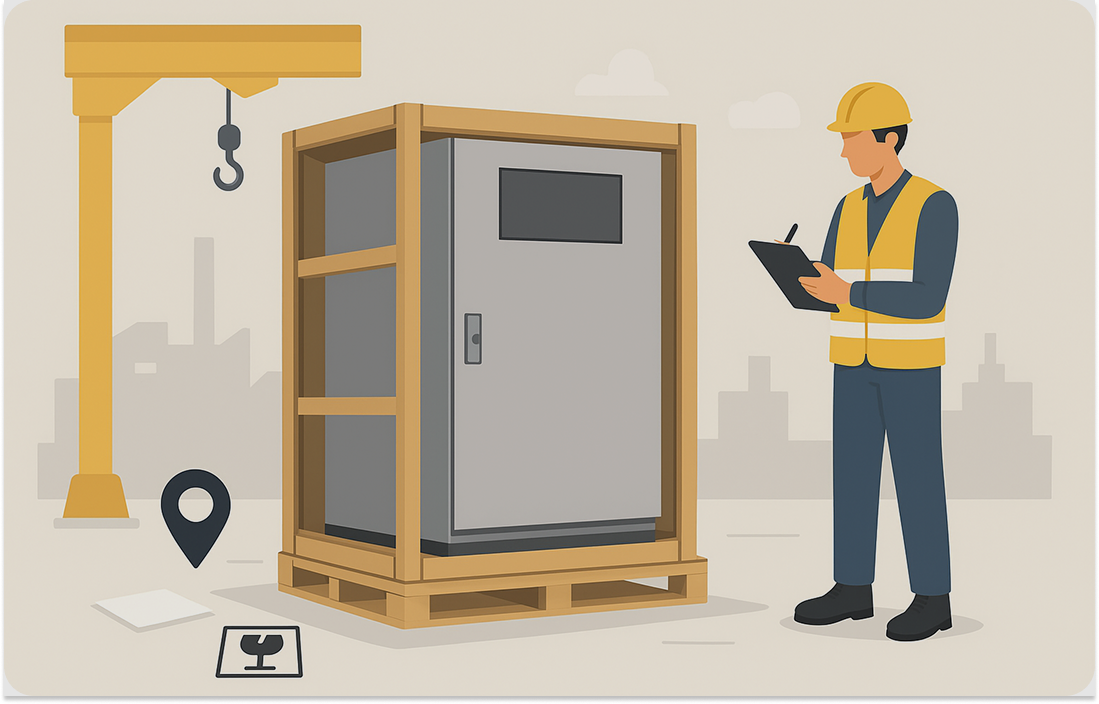
Moving a control cabinet from the factory to a live plant is more than logistics — it's a controlled engineering workflow. Mistakes during packing, transport or installation cost time and money at commissioning. This guide breaks the journey down into clear, practical steps so technicians, project engineers and commissioning teams can avoid the common pitfalls and accelerate start-up.
We’ll cover: pre-shipment preparation, transport & handling, site installation, loop checks & commissioning, and final handover.
1. Pre-Shipment Preparation
The factory should treat shipment as the final part of manufacturing. A few critical checks protect the cabinet and speed installation.
- Final FAT sign-off: Ensure all FAT items are closed or documented as agreed with the client.
- As-built documentation: Include updated drawings, I/O lists, cable schedules and PLC/DCS backups.
- Mechanical protection: Install bolt covers, connector caps, and support brackets for vibration-prone items.
- Packaging: Use custom crates, foam inserts, and desiccant. Protect displays and fragile components separately.
- Labeling & paperwork: Clear shipment labels, UN/fragile markers if needed, and a shipping checklist signed by QA.
2. Transport & Logistics
Transport is a risk window — choose carriers experienced in industrial equipment and brief them on constraints.
- Mode selection: Road vs air vs sea depends on urgency, cost and crate dimensions.
- Handling instructions: Specify lift points, maximum tilt, and stack restrictions in the manifest.
- Monitoring: Use shock/tilt indicators and, when required, GPS tracking for high-value equipment.
- Customs & permits: Prepare certificates of origin, export paperwork and any hazardous material declarations.
3. Site Receiving & Inspection
Receiving the cabinet is a joint responsibility between logistics, site safety and the commissioning team.
- Physical inspection: Check for transport damage, water ingress, or missing items before signing delivery notes.
- Unpack in a controlled area: Use an indoor staging area with clean floors and tables for unpacking and inspection.
- Inventory check: Verify components, spare parts and documentation against the packing list.
- Report & quarantine: Immediately document any damage and quarantine the unit until decisions are made.
4. Installation
Correct mechanical and electrical installation prevents commissioning delays and ensures safety.
- Positioning: Mount the cabinet on prepared foundations or floor plates, check level and anchor torque.
- Earthing: Install primary earth connection and verify continuity to plant earth system before energising.
- Cable entry: Use correct glands, label each cable to match the site cable schedule, and maintain segregation as specified.
- Power feeds: Confirm supply ratings, connect neutral and protective earth correctly, and fit appropriate fuses or breakers.
- Network & comms: Patch switches, set VLAN/IP addresses as per the network diagram, and verify link lights and speeds.

5. Loop Checks, Integration & Commissioning
Commissioning proves the cabinet works with the field devices and the control system. Do it methodically.
- Power-up checks: Verify supply voltages, no-smoke, and equipment health before applying full power.
- I/O loop checks: Simulate inputs/outputs, verify tag mapping and confirm readings vs instruments.
- Integration testing: Check communication with PLC/DCS, SCADA screens, historians and upstream systems.
- Functional tests: Run cause-and-effect scenarios, interlocks, and alarm sequences with stakeholders witnessing results.
- Punch-list & fixes: Document any corrective actions, retest and close items before acceptance.
6. Handover to Operations
A clear handover accelerates plant start-up and reduces warranty issues.
- Handover pack: As-built drawings, PLC backups, network diagrams, FAT report and maintenance instructions.
- Training: Conduct operator and maintenance sessions covering routine checks, local troubleshooting and emergency procedures.
- Spare parts: Deliver critical spares and a replacement list for quick repairs.
- Sign-off: Handover is complete when operations accept the cabinet, ideally after a witnessed run at plant conditions.
7. Common Issues & Practical Mitigations
Conclusion
The cabinet's journey from factory to plant is a chain of steps where engineering, logistics and commissioning meet. Following structured pre-shipment checks, careful handling, disciplined installation and methodical commissioning reduces surprises and gets plants running reliably faster.
Want more practical insights like this? Let’s continue the conversation.
Click Get in touch below to ask a question, discuss real-world challenges, or request guidance.